Seasonality
Operator Breakdown
Origin & Destination Patterns
About Seaplanes at JPX
Straight floats land only on water. Amphibious floats have retractable wheels, allowing landings on both water (NYC Skyports) and paved runways (JPX).
NYC Skyports (East 23rd St, Manhattan) is the seaplane base that connects the city to the Hamptons. Operators like Tailwind Air run scheduled floatplane shuttles from this East River terminal.
Float-equipped aircraft are generally comparable to their wheeled counterparts in noise output. The Cessna Caravan on floats is EASA-certified at 80 dB(A) takeoff — similar to a standard prop plane.
Seaplane service to the Hamptons is overwhelmingly a May–September phenomenon, aligned with the summer season. Activity drops to near zero in winter months.

de Havilland Beaver
DHC2de Havilland Canada DHC-2 Beaver
The legendary bush plane, considered one of the greatest utility aircraft ever built. First flew in 1947 and still operating worldwide on floats.
The Beaver was designed from the start for float operations in the Canadian wilderness. Its short takeoff ability and rugged construction make it ideal for water-based flying — even 75+ years after its first flight.
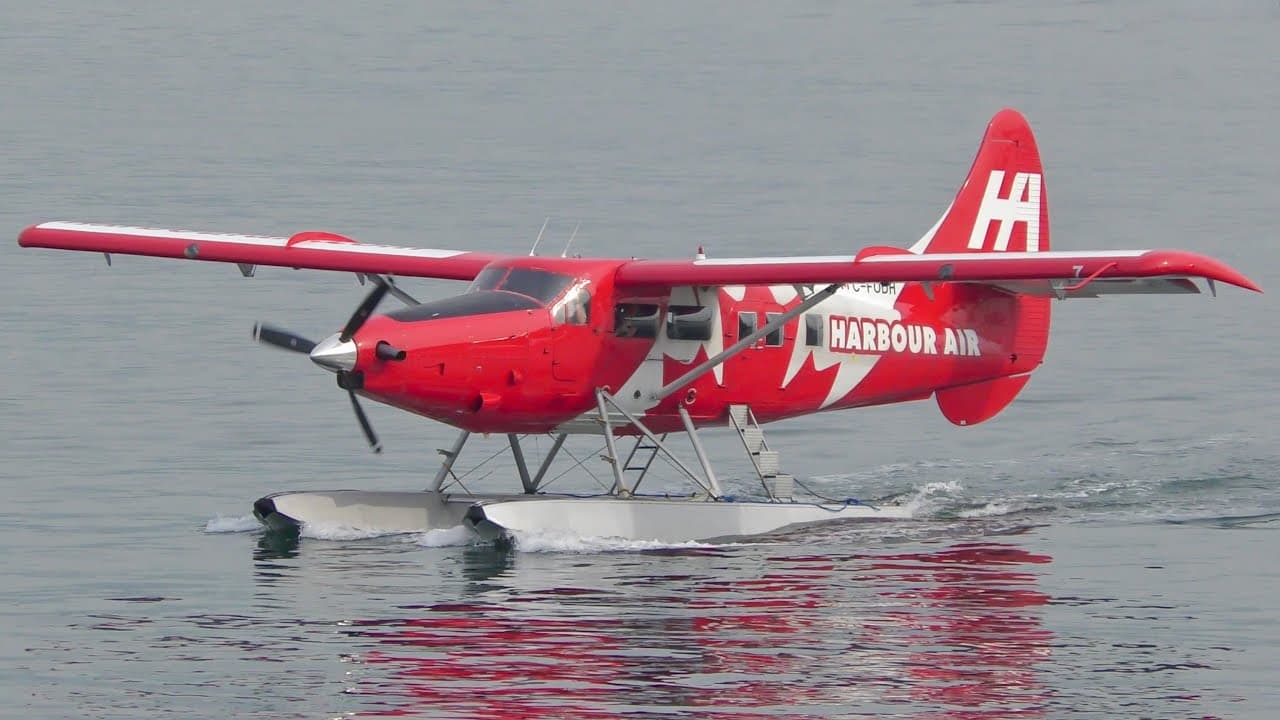
de Havilland Otter
DHC3de Havilland Canada DHC-3 Otter
The Beaver's bigger sibling — carries more passengers and cargo while retaining excellent short-field and float performance.
Most surviving Otters have been converted from the original piston engine to a Pratt & Whitney PT6A turboprop, dramatically improving reliability and power. These "Turbine Otters" are prized for scenic float plane tours.
Seaplanes classified using three-layer detection: known float plane types, known seaplane operators, and candidate aircraft types routing via NYC Skyports.
Flight data via FlightAware AeroAPI. Built and maintained by Marc Frons, as an independent civic data project.